Jasmine Rice Cacio e Pepe with Cabbage
A Roman-inspired rice dish built on the bones of cacio e pepe — Pecorino, coarse black pepper, lemon, and ribbons of Savoy cabbage folded in at the end.
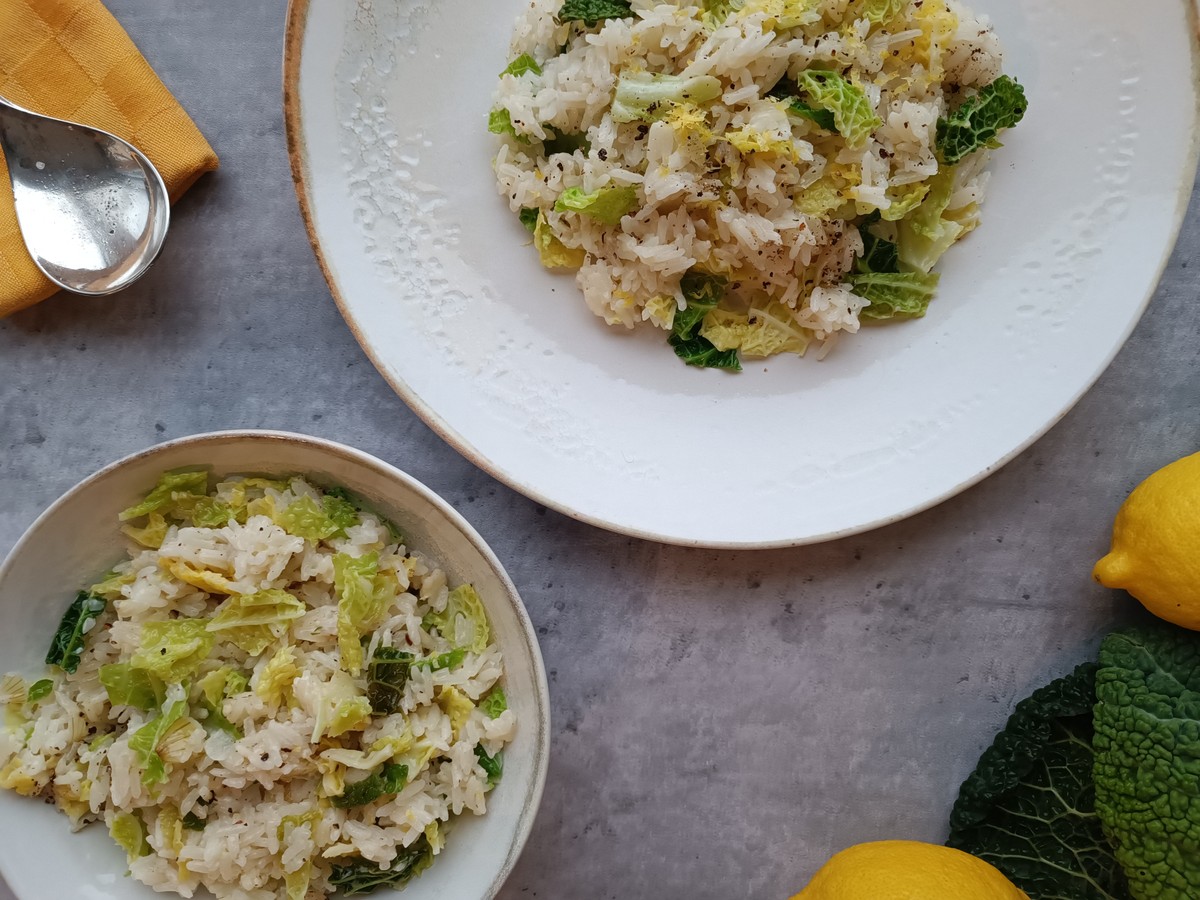
My Italian family has always cooked rice the way most people cook risotto — slowly, with patience, adding liquid a ladleful at a time and never walking away from the pot. Growing up watching my relatives cook in Rome, I noticed that the rice used was rarely arborio; whatever was in the house went in, and it always came out right. That stubbornness — the insistence that technique matters more than the exact ingredient — is something I've carried into my own kitchen ever since.
This dish is built on the bones of cacio e pepe, that Roman recipe of radical simplicity: Pecorino, black pepper, and something starchy to hold it all together. Here the starch is jasmine rice, which I always have in the house and which releases just enough to give the sauce its body. The lemon zest and a small squeeze of juice come in at the end — not to make it taste of lemon, but to lift everything else. The cabbage wilts into the heat of the rice in the last minute and does exactly what it should: disappear a little, and make the dish feel complete.
- — olive oilenough to coat the base of the pan
- 1 white onionvery finely chopped
- 300 g jasmine rice
- 100 g unsalted butterdivided in two
- 625 ml boiling water
- 625 ml hot vegetable broth
- 1 tsp freshly ground black peppermill it coarsely
- 100 g Pecorino Romanofinely grated, plus extra to serve
- ½ large Savoy cabbageshredded into thin ribbons
- 1½ unwaxed lemonsfinely grated zest of both, juice of ½ tsp only
No Pecorino? Parmesan works well here — it's milder and slightly less salty, so you may want to add a little extra and taste as you go. A combination of both is also excellent.
Heat a large, wide saucepan over a medium-low heat and add enough olive oil to coat the base generously. Add the onion and cook gently for 8–10 minutes, stirring occasionally, until completely soft and translucent — do not let it colour.
Add the rice and half the butter. Stir gently for a minute so the grains are well coated. Meanwhile, combine the boiling water and the hot vegetable broth in a separate pot and keep it at a gentle simmer.
Begin adding the liquid a ladleful at a time, stirring constantly, waiting until each addition is fully absorbed before adding the next. Resist the urge to raise the heat — the slow, steady pace is what coaxes the starch from the rice. After using about one-third of the liquid, taste the rice: the grains should have started to soften but still have some bite.
Continue adding liquid and stirring until the rice is just cooked through — tender, with a very slight resistance. This will take 20–25 minutes in total. If you run out of liquid and the rice still needs a little more time, add hot water by the spoonful.
Add the coarsely ground black pepper and the Pecorino in one go. Stir vigorously — you want the cheese and pepper to melt into the starchy liquid and become a glossy, creamy sauce. This is the moment that makes or breaks the dish; keep stirring for a full minute.
Stir in the shredded cabbage ribbons, followed by the remaining butter. Let the cabbage wilt into the heat of the rice for about a minute — you want it soft but not collapsed. Finally, add the lemon zest and the small squeeze of juice. Stir once more and taste for seasoning.
Take the pan off the heat. Ladle into warm, wide bowls. Finish with a drizzle of good olive oil and a little extra Pecorino (or Parmesan) grated directly over the top. Serve immediately — this waits for no one.
Jasmine rice releases starch differently from arborio — it will never be quite as thick, but it has a lovely floral note that works beautifully with lemon. Don't rinse the rice before cooking; you need every bit of starch it has to give.
Coarsely ground is not the same as finely ground here — it's the whole point. Use a pepper mill set to its coarsest setting, or crush the peppercorns briefly in a mortar. The little bursts of heat against the creamy cheese are what make this dish.
Replace the butter with a good olive oil (add it in two stages just as you would the butter) and use a plant-based hard cheese or nutritional yeast for the creamy finish. The lemon and pepper carry the dish beautifully either way.